
Case Study
Case Study
Enhancing the Intimate Concert Search Experience for Users
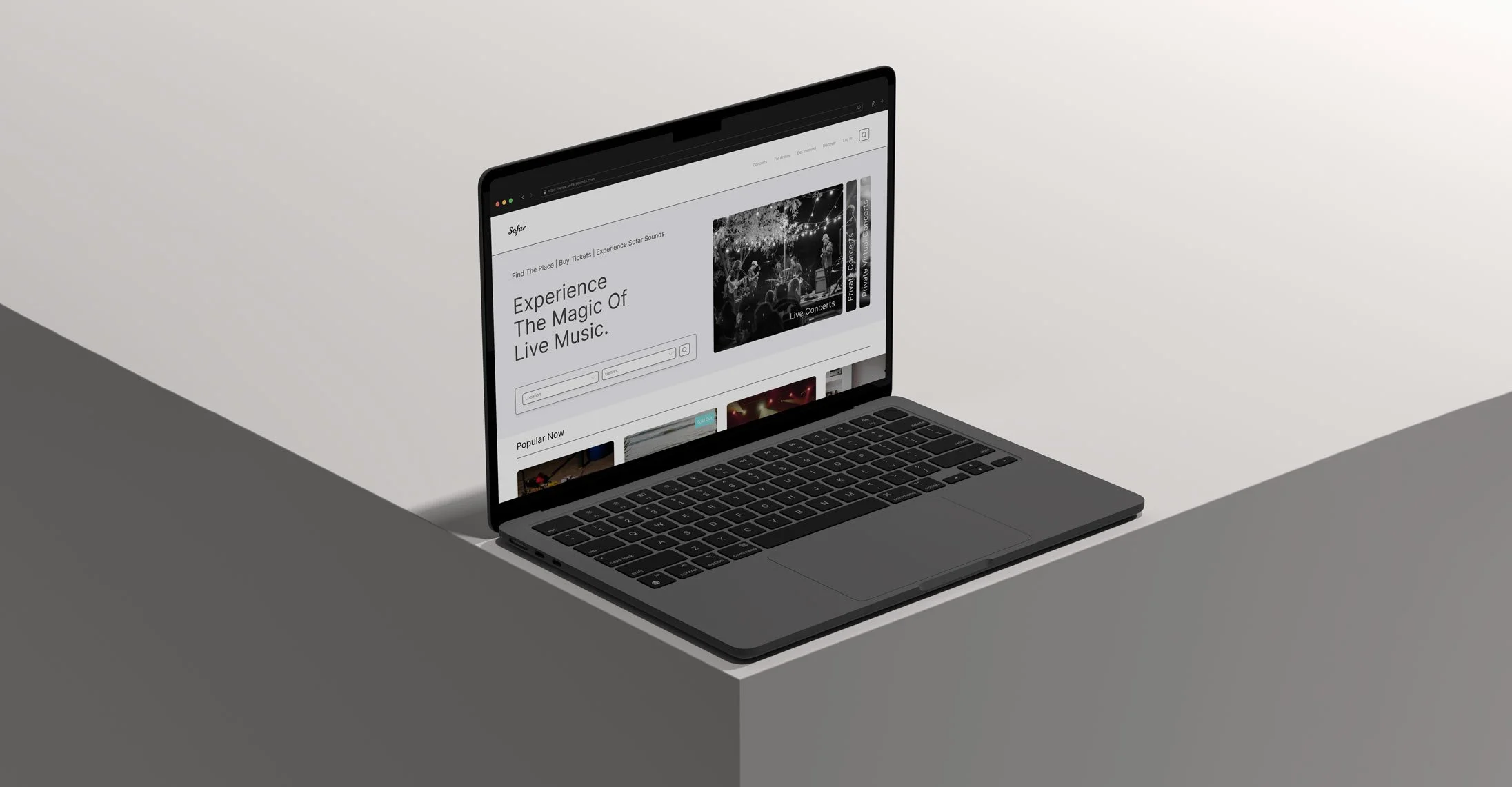
Sofar Sounds is a global music community connecting artists and audiences through live music events in over 400 cities worldwide. This case study's objective is to enhance users' search experience, as the existing search functionality only offers a single dropdown menu. From a business perspective, this can decrease user engagement and reduce revenue.
I teamed up with another designer to boost the experience of the Sofar Sounds website. We focused on the search experience and making it easy for existing and new users to find local concerts quickly and successfully.
-
✎ User Research
⇝ Product Strategy
◔ UX Design
❏ UI Design
▥ Prototyping
☺ Usability testing
-
◖ Figma
◖ Figjam
◖ Maze
◖ Notion
◖ OpenTable
◖ Slack
◖ Dovetail
-
▮ 3 weeks
About the project
The problem
The limited search experience may decrease user engagement and lower ticket sales. For users, the current search functionality could be better. It only offers a single dropdown menu, leading to frustration and difficulty finding suitable events. The limited search experience can reduce user satisfaction with the platform.
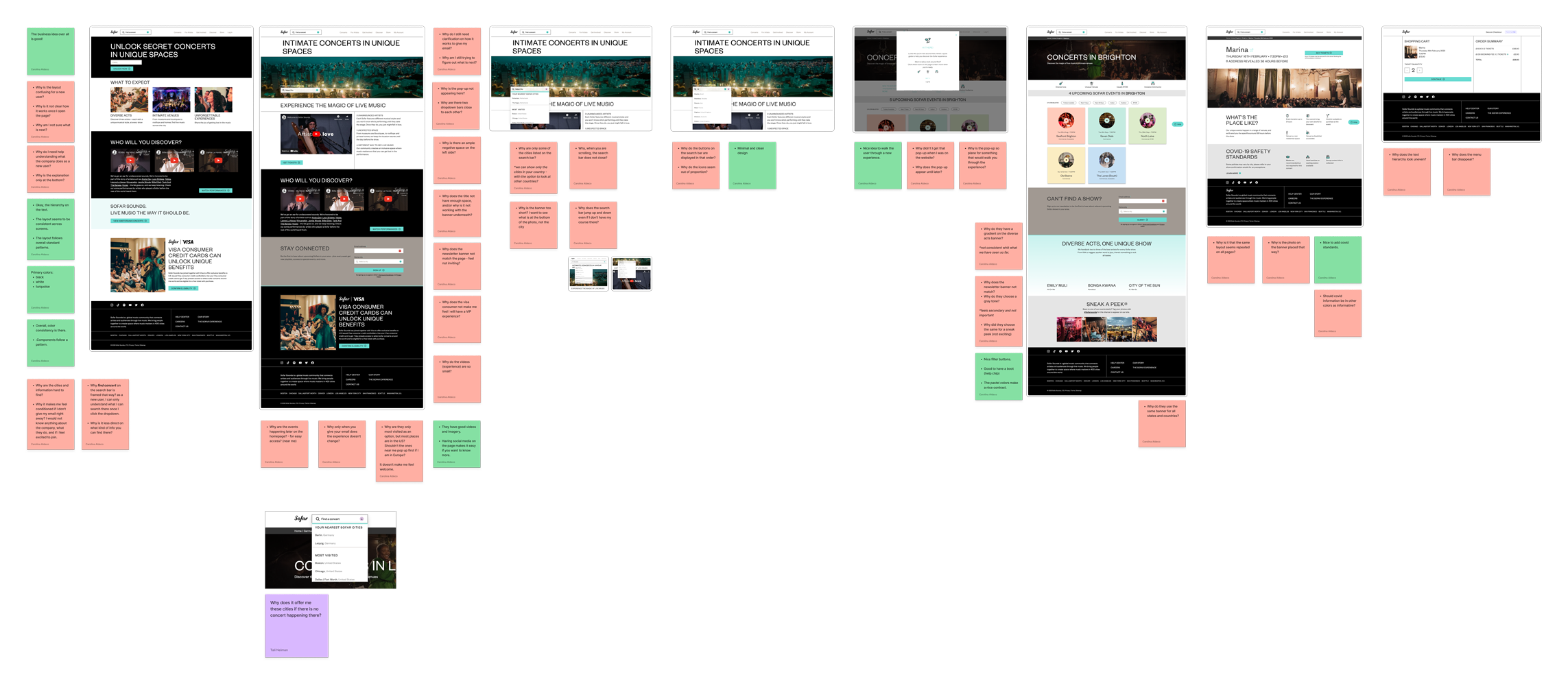
Usability Audit
Our usability audit test highlighted several key areas for improvement, including the flow, email sign-up requests, copy, and shopping experience. By addressing these issues, we improved the overall user experience and made it easier for new users to understand and engage with the company.
Competitor Benchmarking
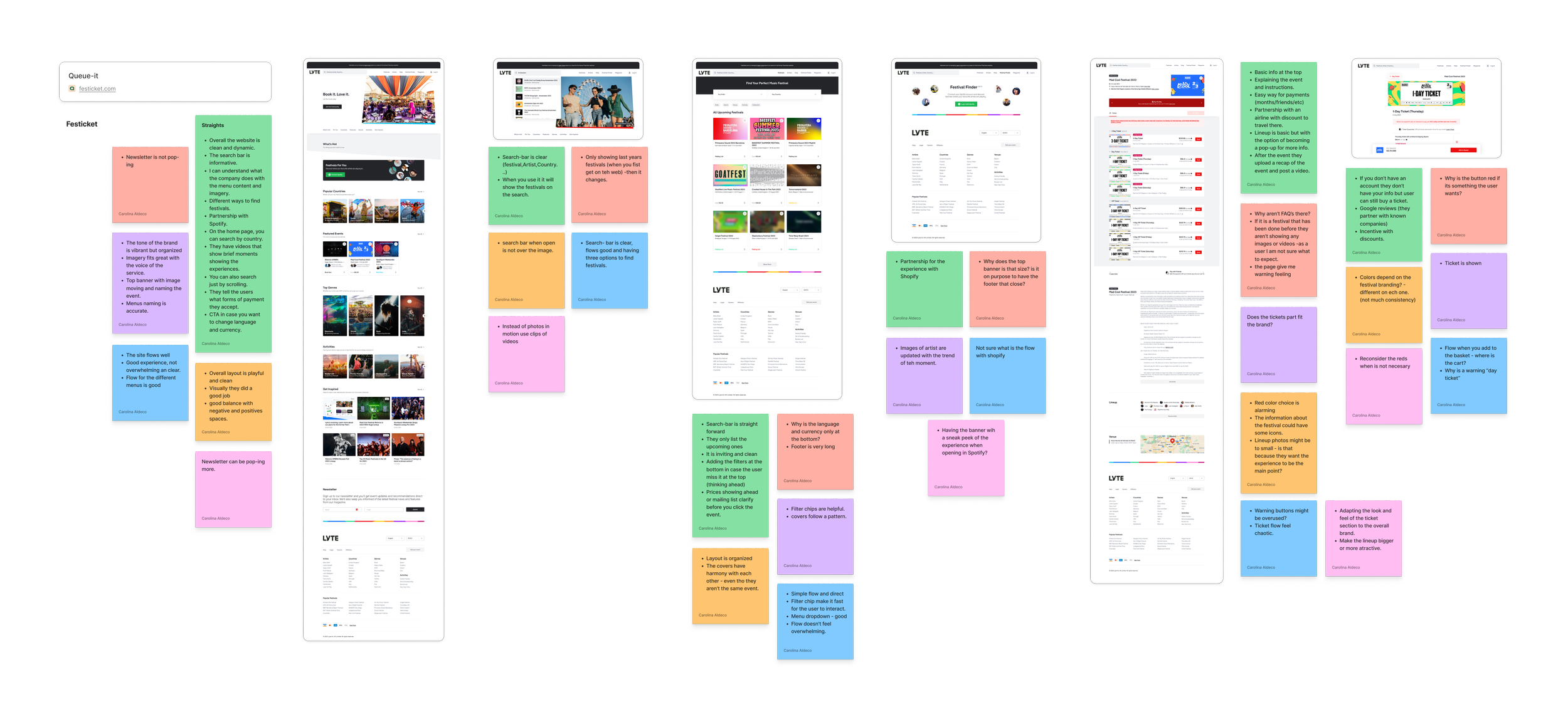
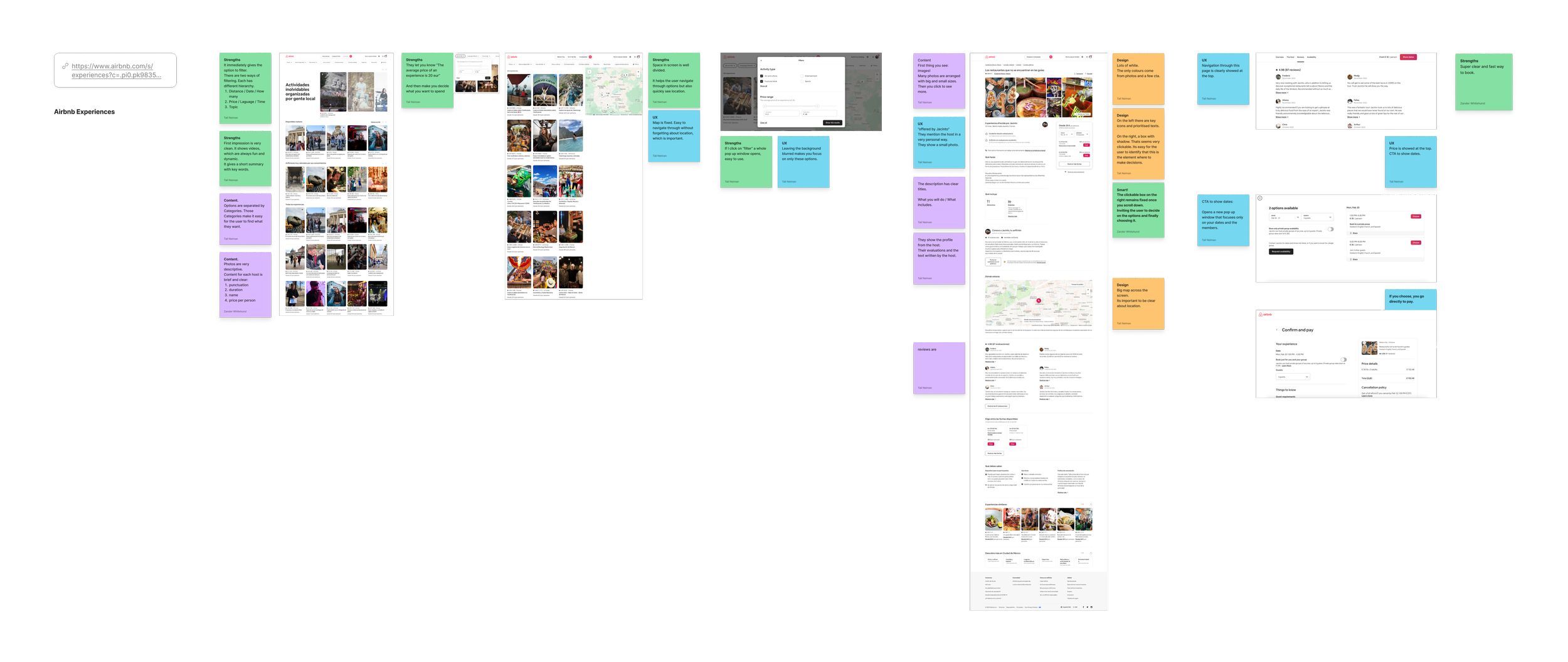
Conducting competitor benchmarking helped us identify the strengths and weaknesses of both direct and indirect competitors, providing valuable insights for improving the user experience and overall design of Sofar Sounds.
We analyzed Festicket and Airbnb Experiences and noted that their clean and dynamic designs are assets in attracting and retaining customers. The websites provide multiple ways for customers to find concerts, making event planning easier. The imagery on these websites effectively communicates the company's purpose and brand, while partnerships with known brands increase customer trust and credibility.
User Research
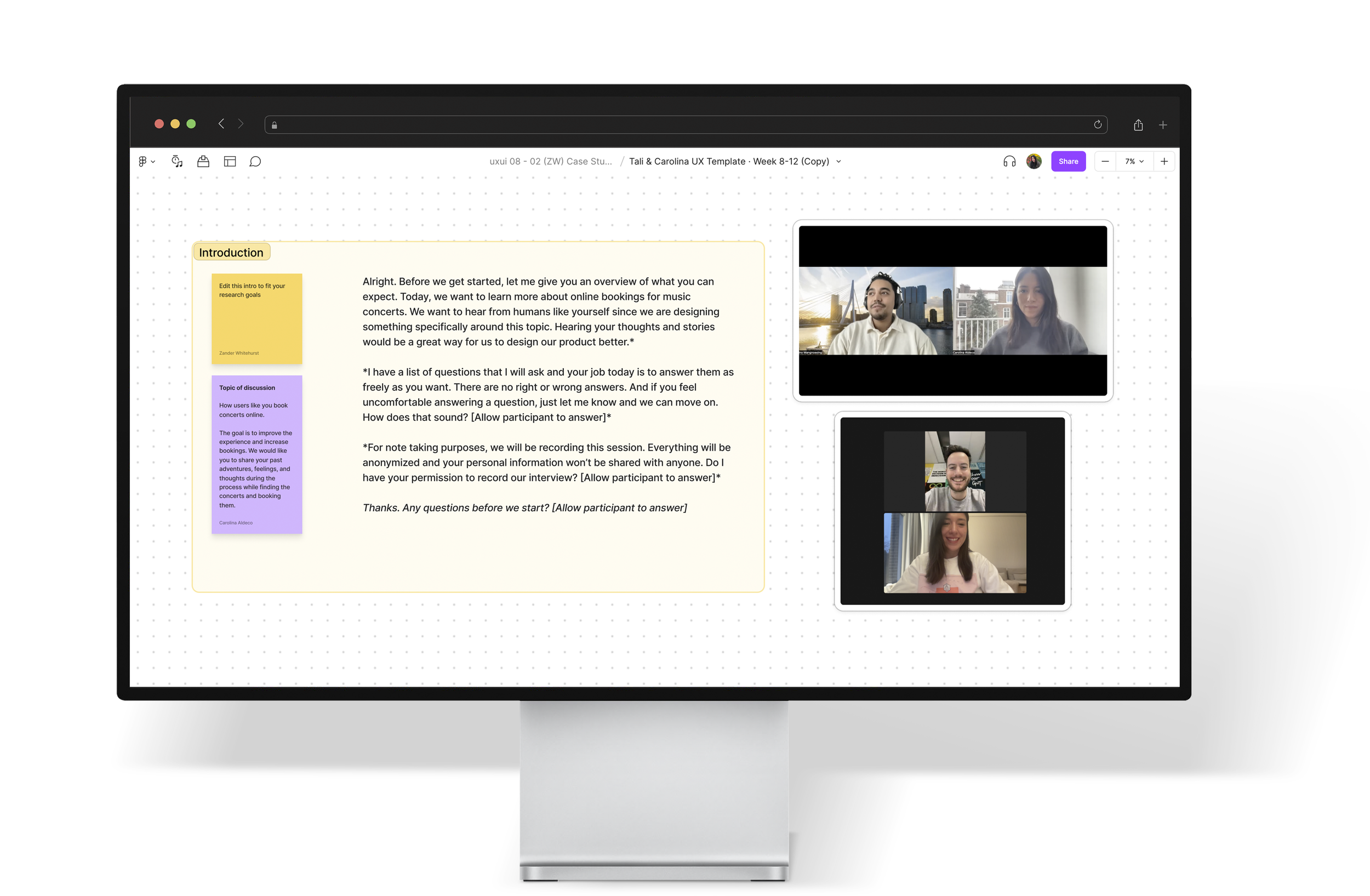
We conducted structured interviews to understand better the target customer and what they prioritize when looking for concerts online.
Taxonomy and Affinity Map
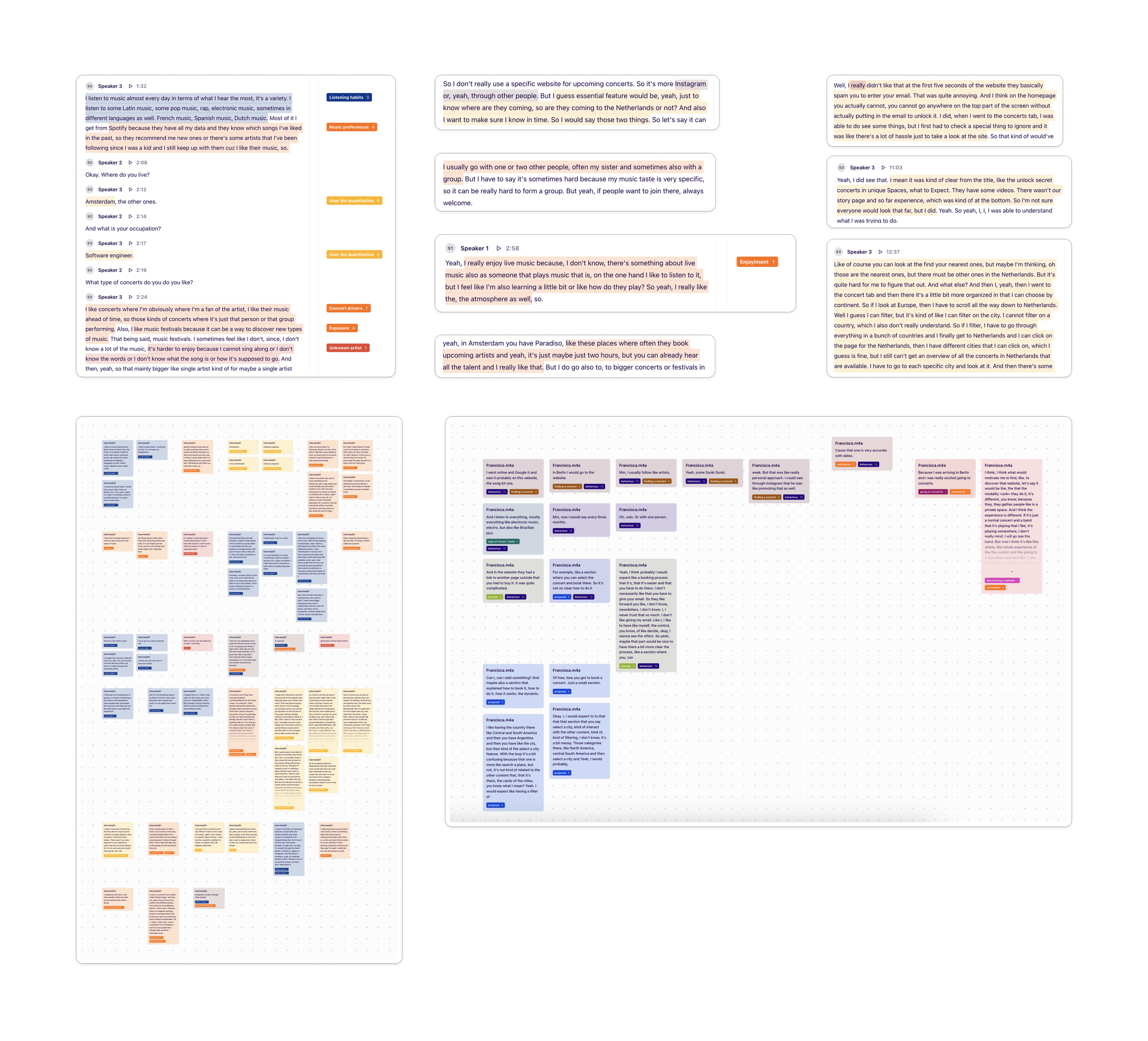
Highlighting nuggets and creating affinity maps during ideation helped us organize and categorize user research information. The key learnings from the tagging taxonomy interviews suggest that personalized experiences, atmosphere, and exposure to new music and talent are primary motivators for people attending concerts. They typically purchase tickets from venues or known ticket seller platforms and find out about concerts through social media. Inhibitors to attending concerts, such as cost or lack of interest in the lineup, were mentioned in some interviews but may be less significant in this concert-goer group.
Information Architecture
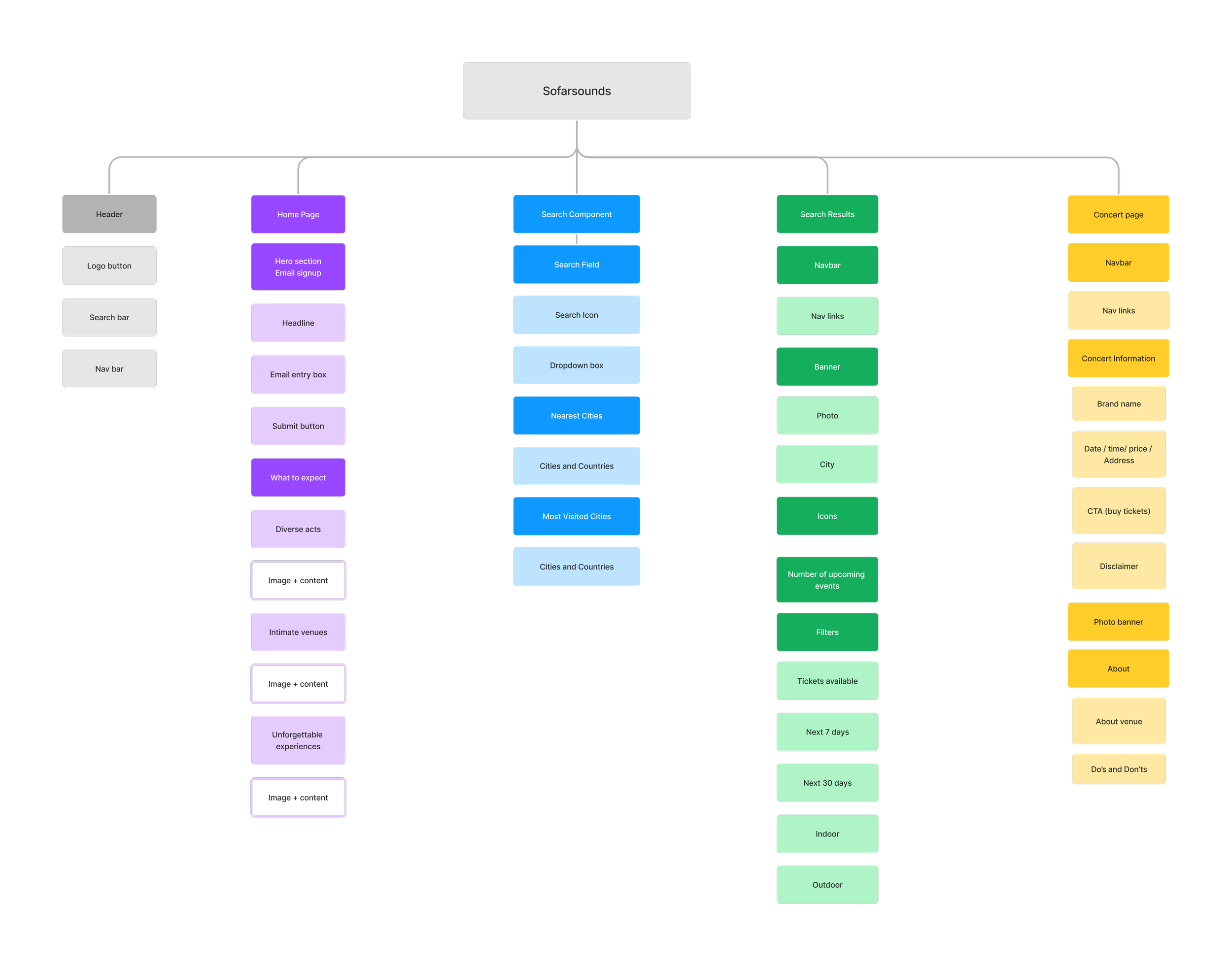
We explored the existing website's information architecture (IA) to understand its current structure, organization, and navigation.
Our analysis revealed several issues with the existing IA of the website. The repetitive dropdown menus were overwhelming and confusing for users, leading to a disjointed and ineffective user experience. The information in the dropdown menus also needed to be more relevant to the user.
The menu copy lacked clarity, negatively impacting users' understanding of the search and the company's offerings.
Furthermore, we found that the information about the company was located at the bottom of the homepage. A better placement for this information could help new users who may need help understanding the website's purpose.
To address these issues, we proposed a new IA that addresses the identified weaknesses. We recommended reorganizing the menu items to ensure they are clear and concise, avoiding unnecessary repetition and minimizing confusion and the number of clicks.
We also suggested reworking the dropdown menus and adding more than one way to search on the homepage to ensure a seamless user experience.
To make the website's purpose more apparent to new users, we proposed moving the information about the company to the top of the homepage, giving it greater prominence.
Ideation and rapid prototyping
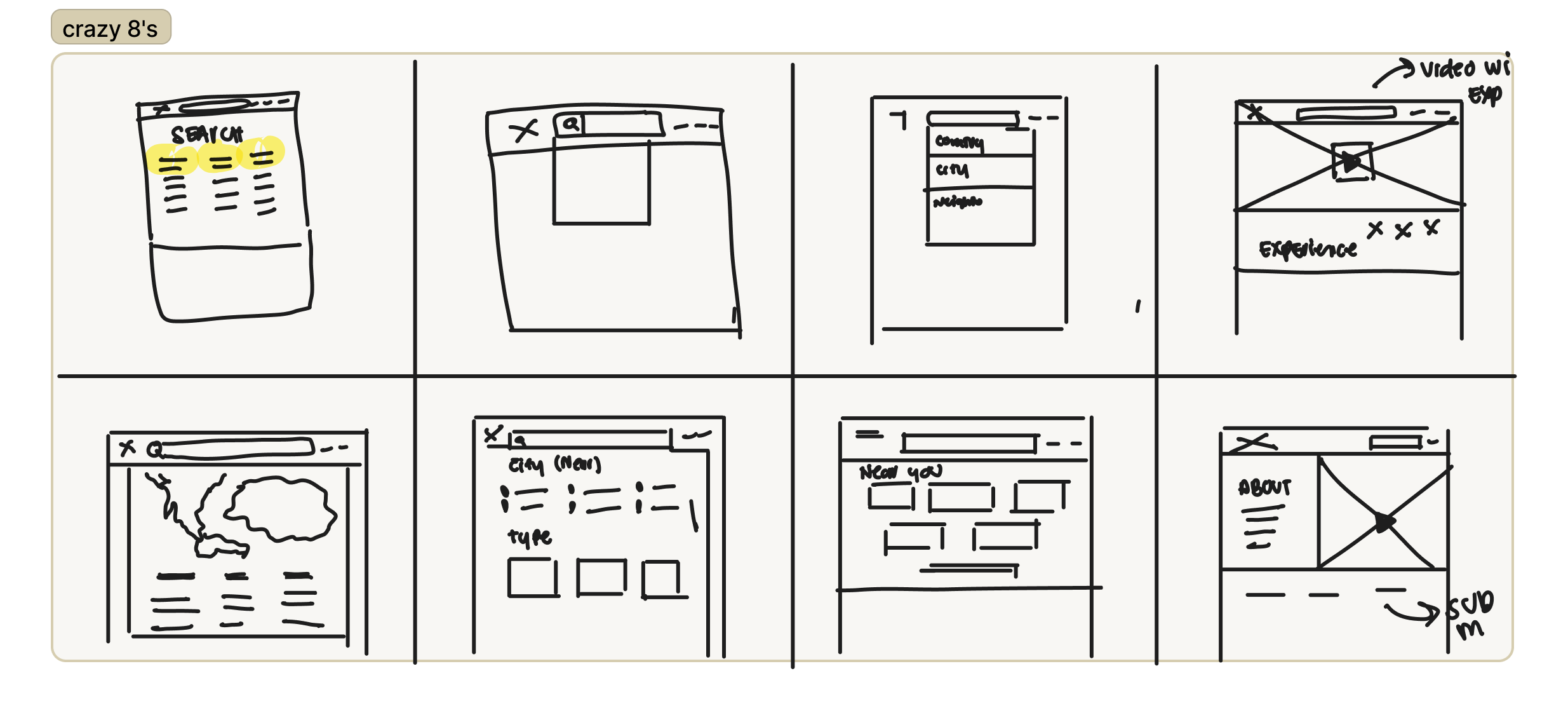
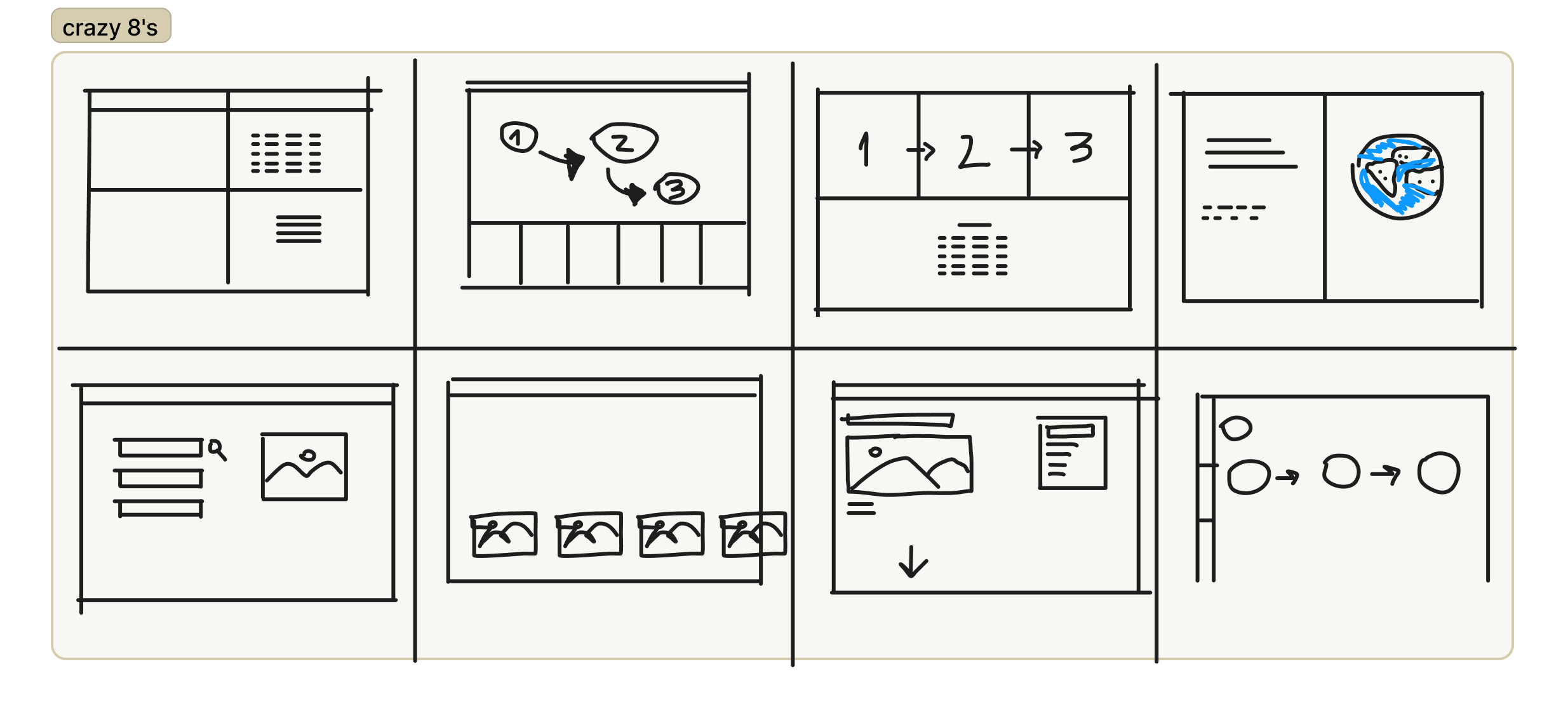
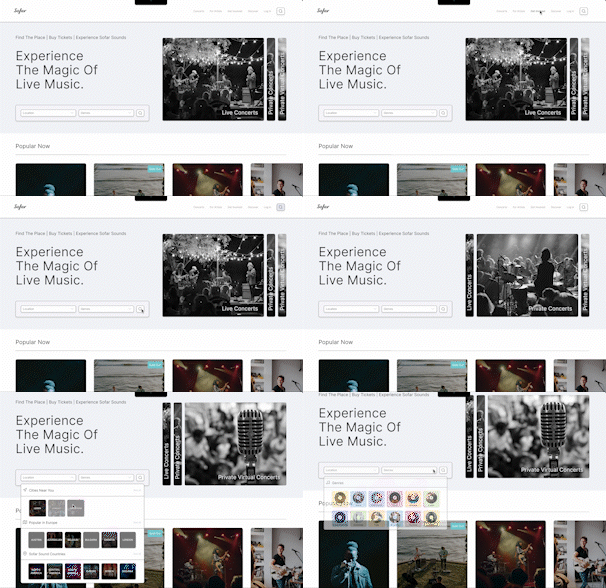
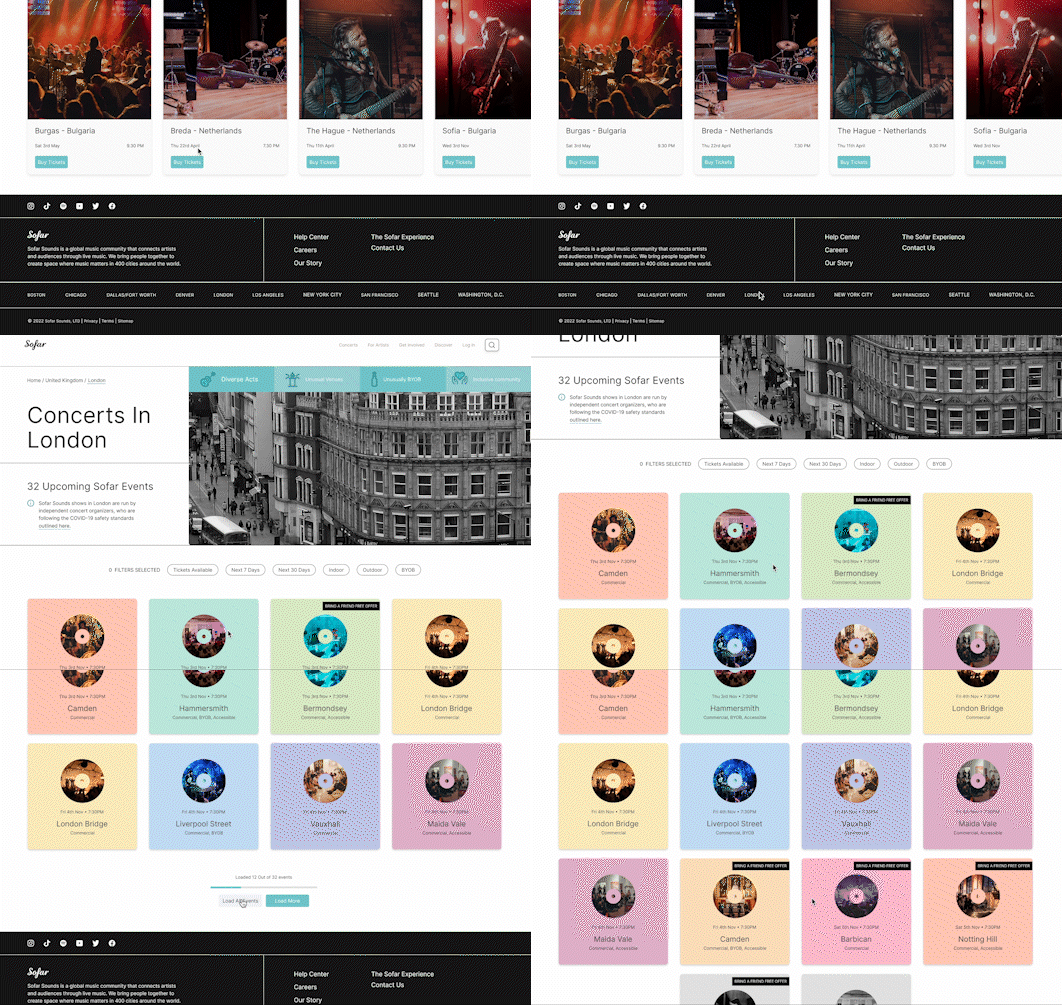
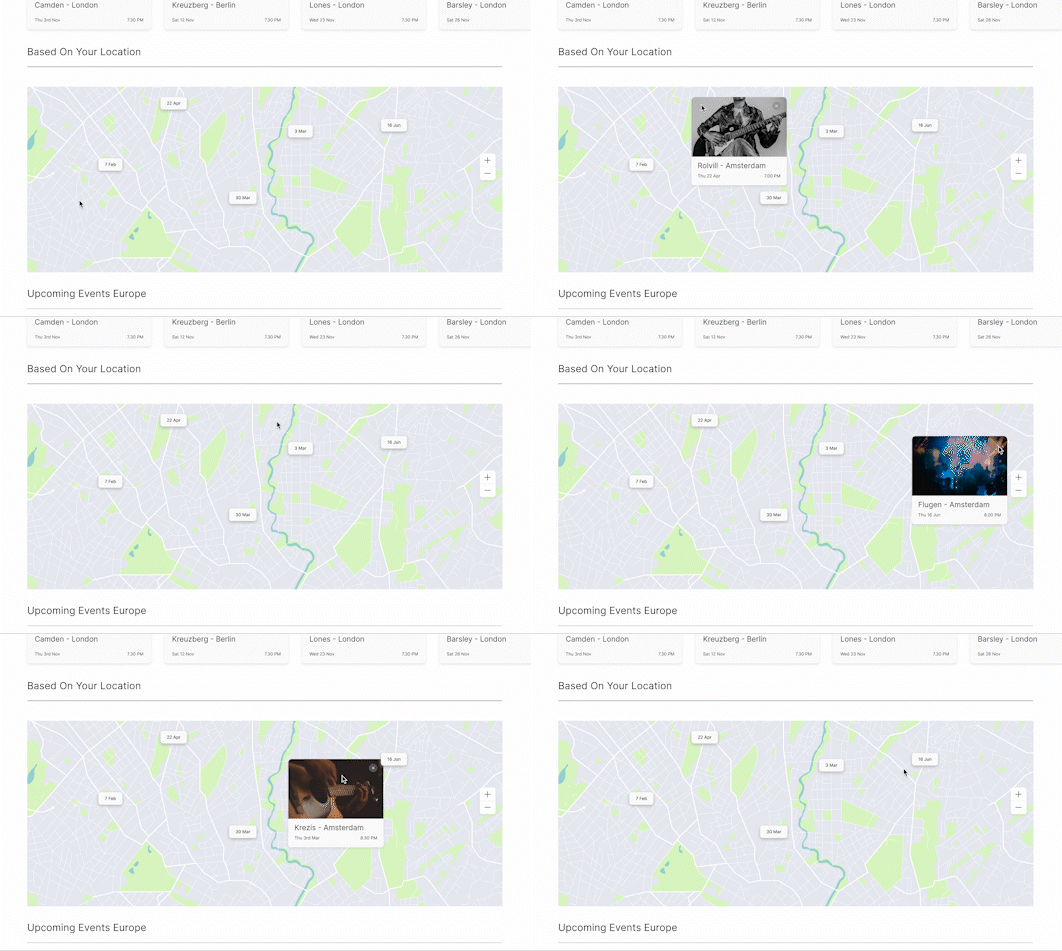
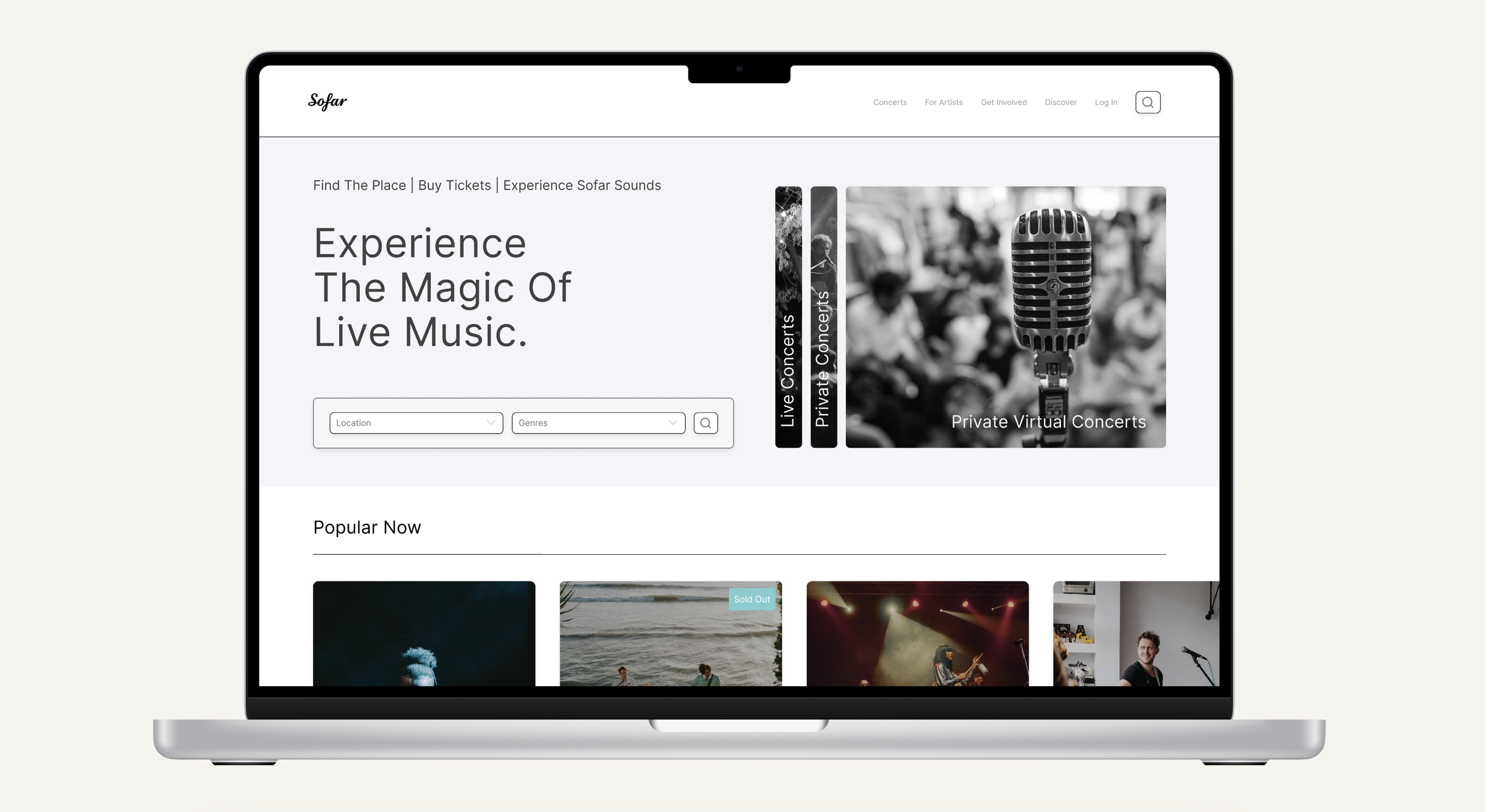
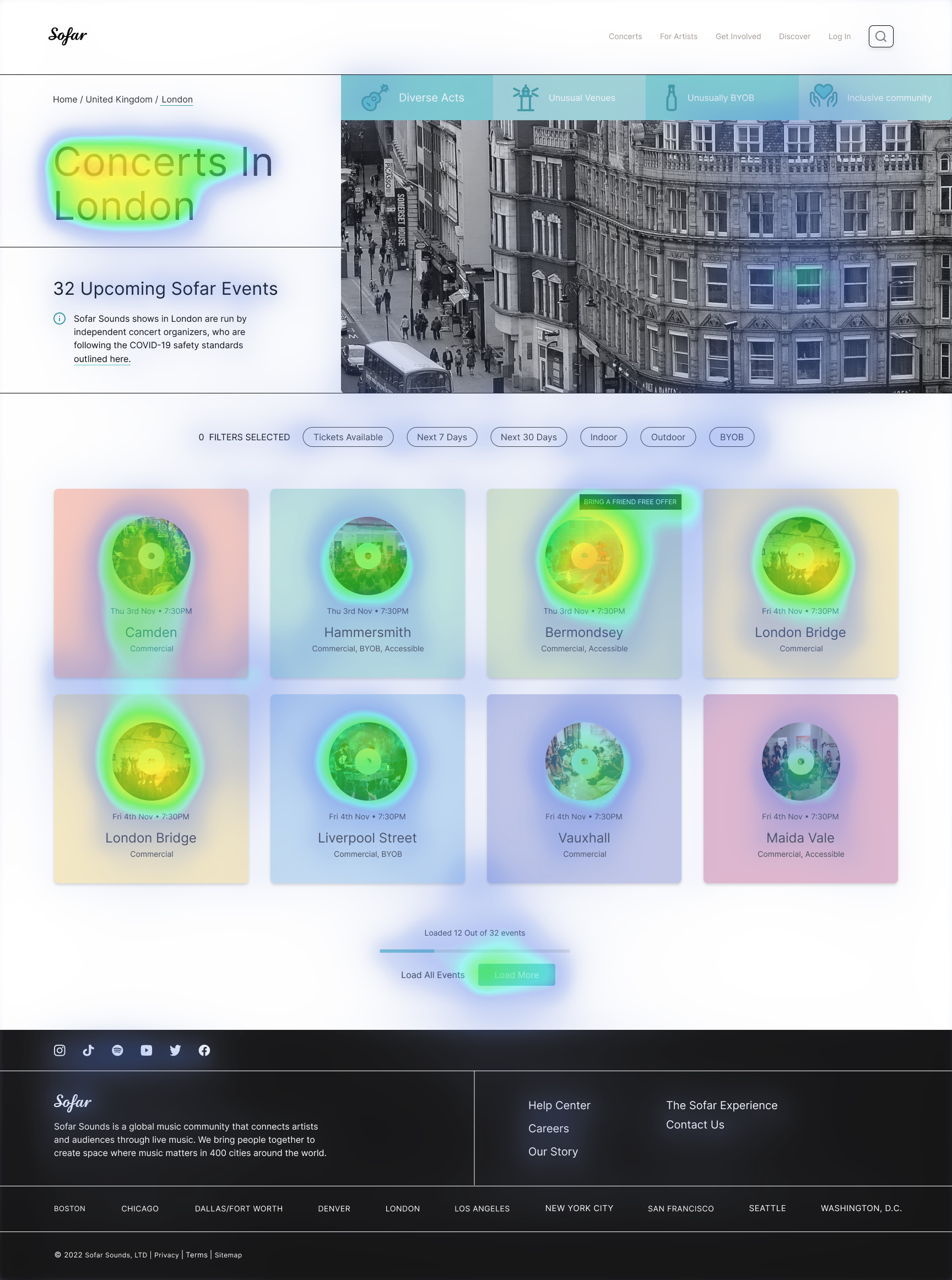
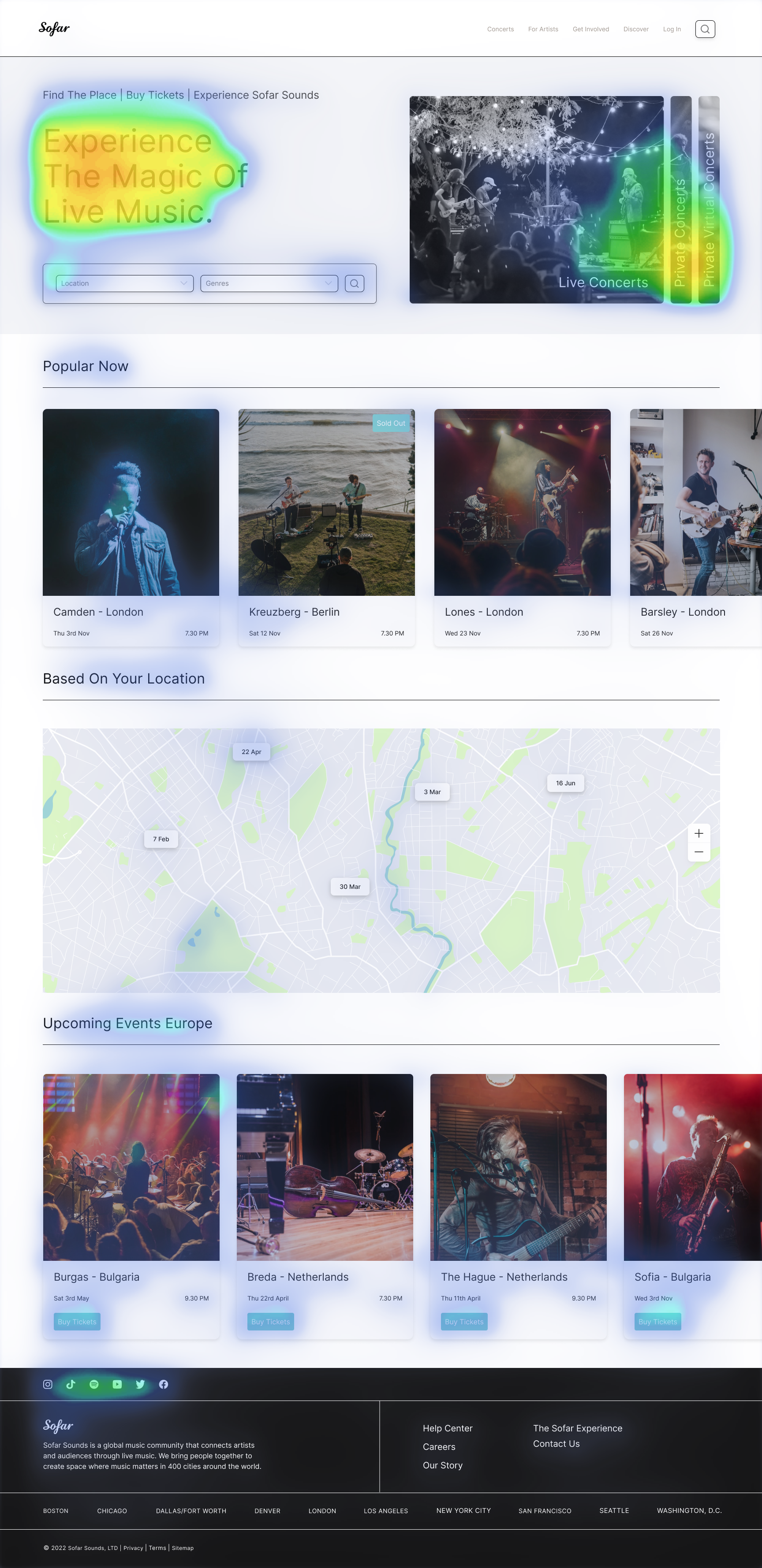
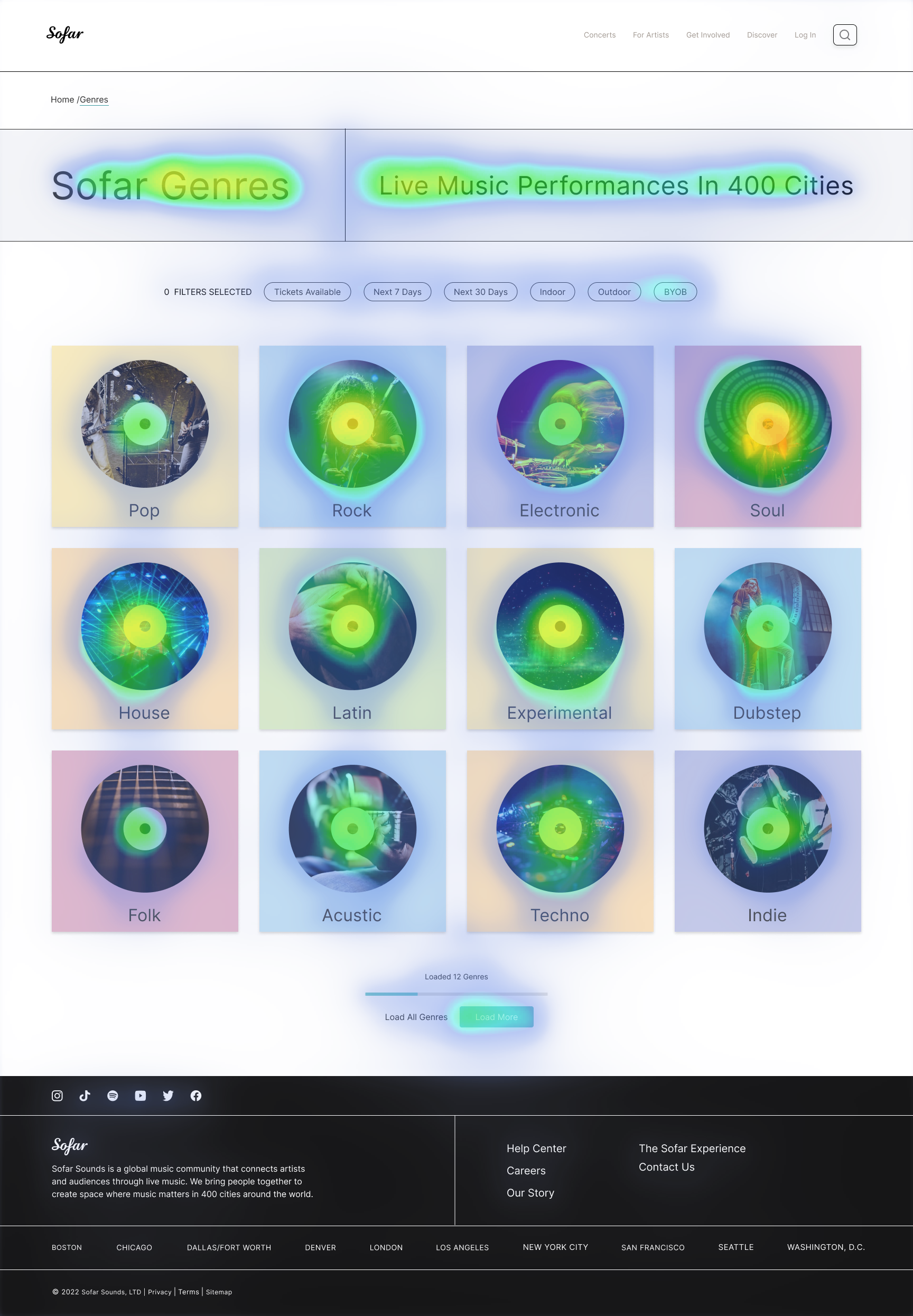
We generated a large pool of ideas and refined them into more concrete concepts using the "crazy 8's" exercise. We explored ways to visualize the search bar, such as using icons, maps, visuals, and filters to make it stand out. We designed a new landing page with a straightforward search function and intuitive filter options to improve the user flow.
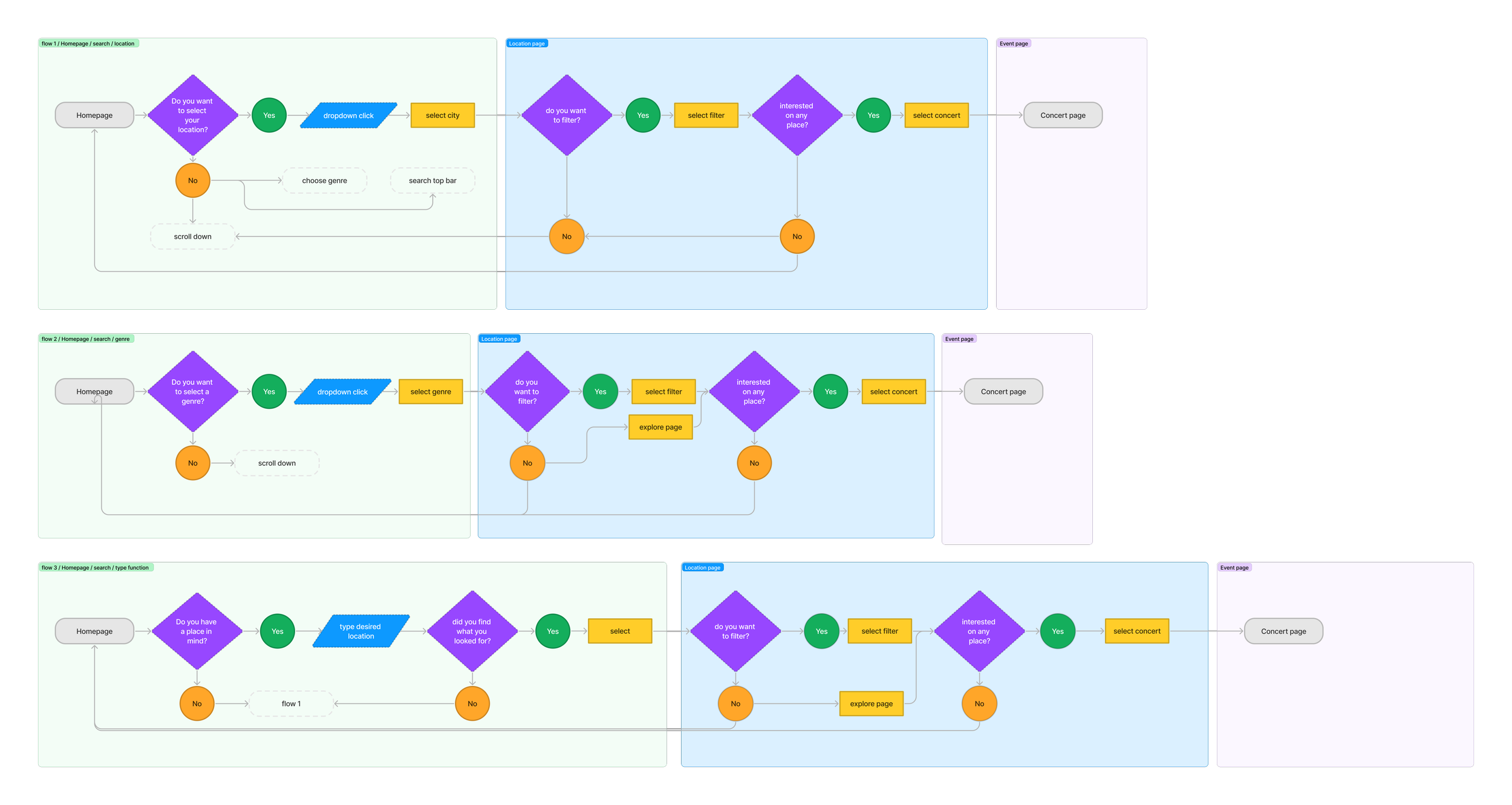
Improved User Flow
Styles & Components
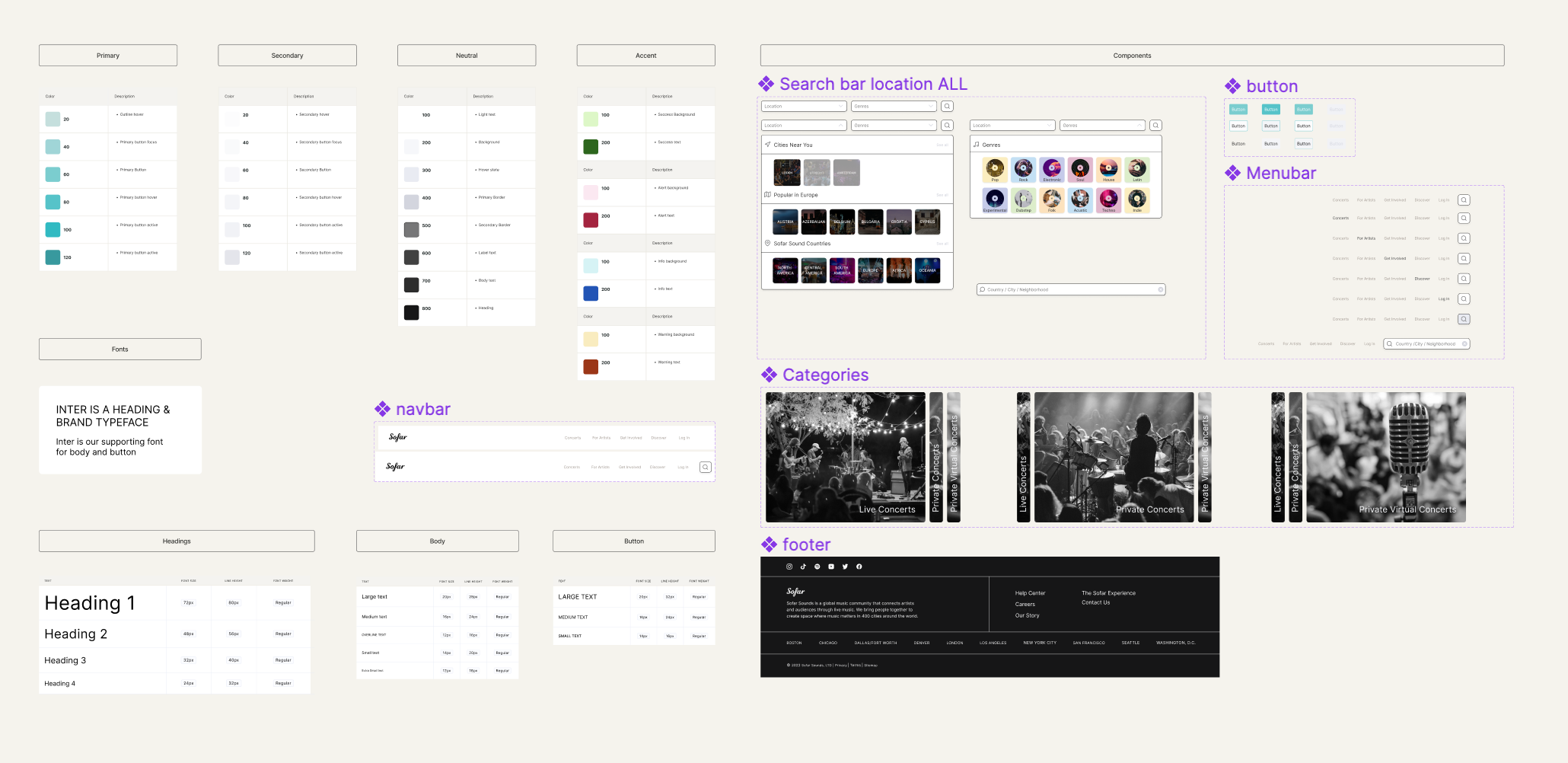
To maintain brand consistency, we decided not to change the fonts and color styles. To make our prototype more engaging and interactive, we utilized styles to develop a complete collection of components. Each component was meticulously assigned micro-interactions that would provide users with visual cues. These cues were integrated into our high-fidelity prototypes.
High Fidelity Prototype
We created a functional high-fidelity prototype for usability testing, which we separated into blocks. Next, we developed a set of questions in Maze concerning possible solutions we developed for the site's current issues, hoping to get feedback about the new search experience.
Usability Testing
After developing a functional prototype, we formulated a series of question sets that we divided into blocks. These sets were then uploaded onto Maze, an online UX research tool that enables teams to conduct both qualitative and quantitative research, in order to gather direct feedback from potential users about their experience with the prototype.
Conclusion
By expanding the search functionality and implementing additional search filters, we improved the user experience of Sofar Sounds. Our research and ideation helped us to design a solution that meets the needs and motivations of our target audience, resulting in a more personalized search experience.
Next steps
Test outcomes with key learnings
Adjusting tests if necessary
Rerun test for more feedback